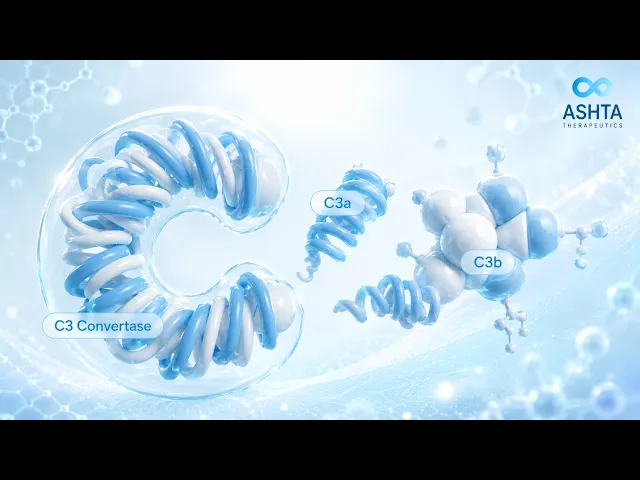
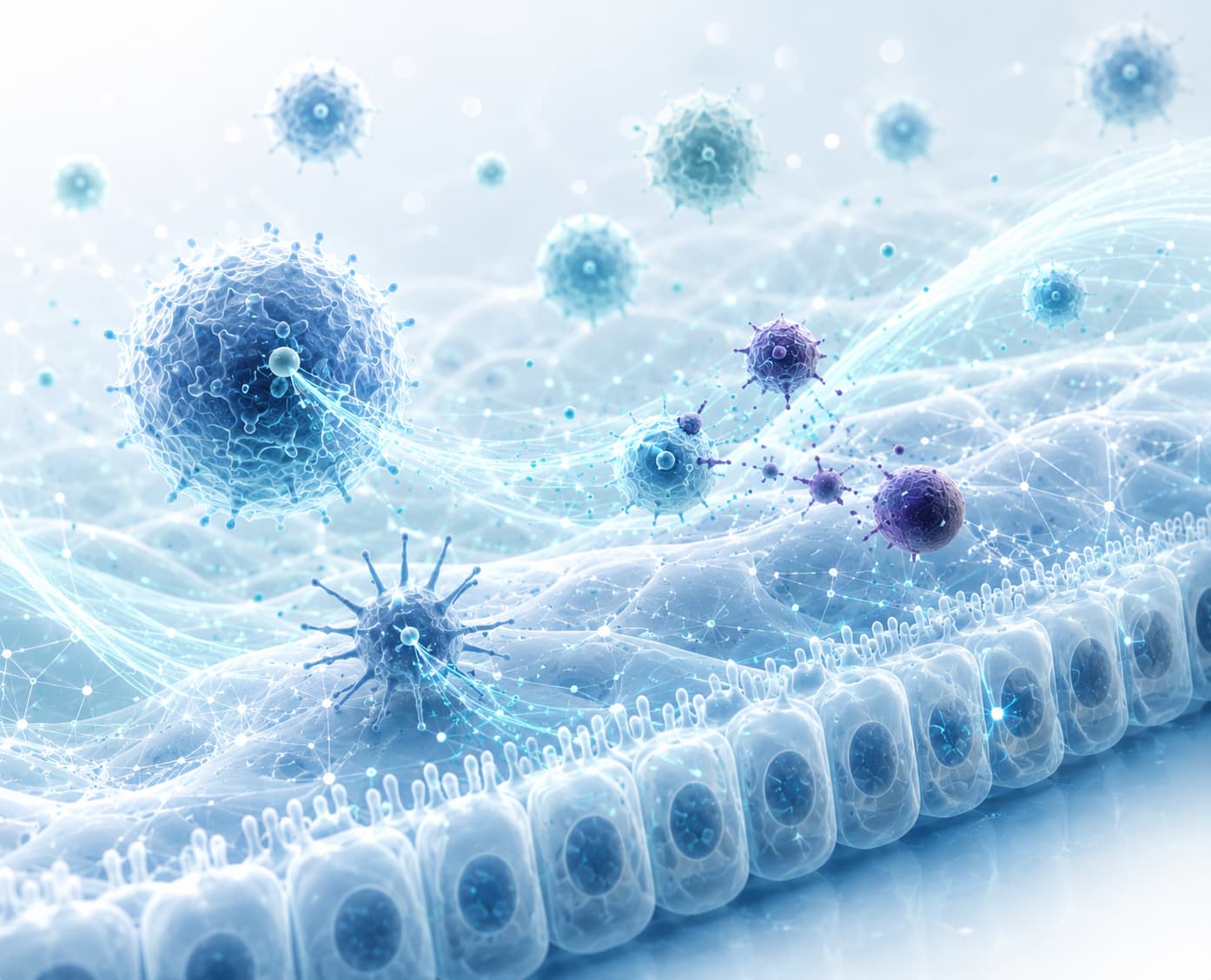
Complement is a coordinated system of immune proteins distributed across blood, tissues and cell surfaces. When activated, this network helps detect infection and injury, recruit immune cells, clear pathogens and damaged material and support tissue repair.
In health, complement protects. When activation becomes prolonged, excessive, or misdirected, the same biology can amplify inflammation and drive chronic immune-mediated disease.

Detect
infection · injury

Recruit
immune cells

Clear
damaged pathogens

Restore
tissue homeostasis
The Central Hub
Three complement pathways respond to different biological triggers - classical, lectin and alternative. Despite different entry points, they converge at one critical event: C3 cleavage.
C3 cleavage generates two biologically distinct outputs. C3b tags pathogens and damaged material for clearance. C3a acts as a soluble inflammatory signal through the GPCR C3aR.
This distinction is central to our scientific strategy. Targeting C3aR may allow selective modulation of inflammatory signalling while preserving core host-defense biology - rather than shutting down complement broadly.
Two outputs from one node. Protective clearance and receptor signaling — biologically separable.
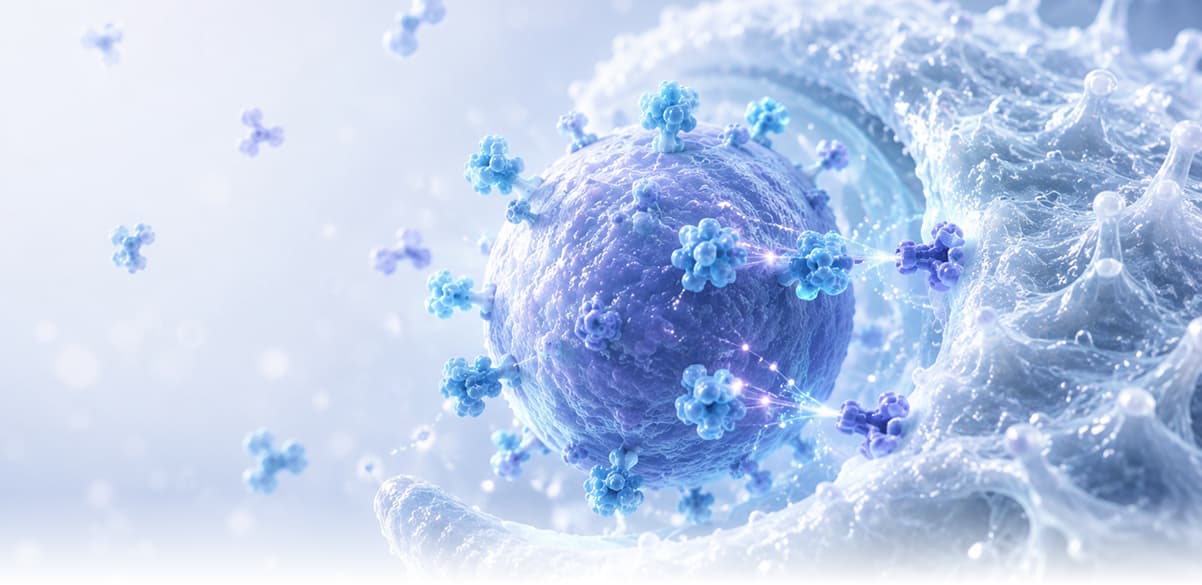
C3b protects.
C3b helps immune cells identify and clear pathogens, altered cells, and damaged material through opsonization and complement-mediated clearance. It plays a central role in host defense and immune homeostasis.
Opsonization
Clearance
Host Defense
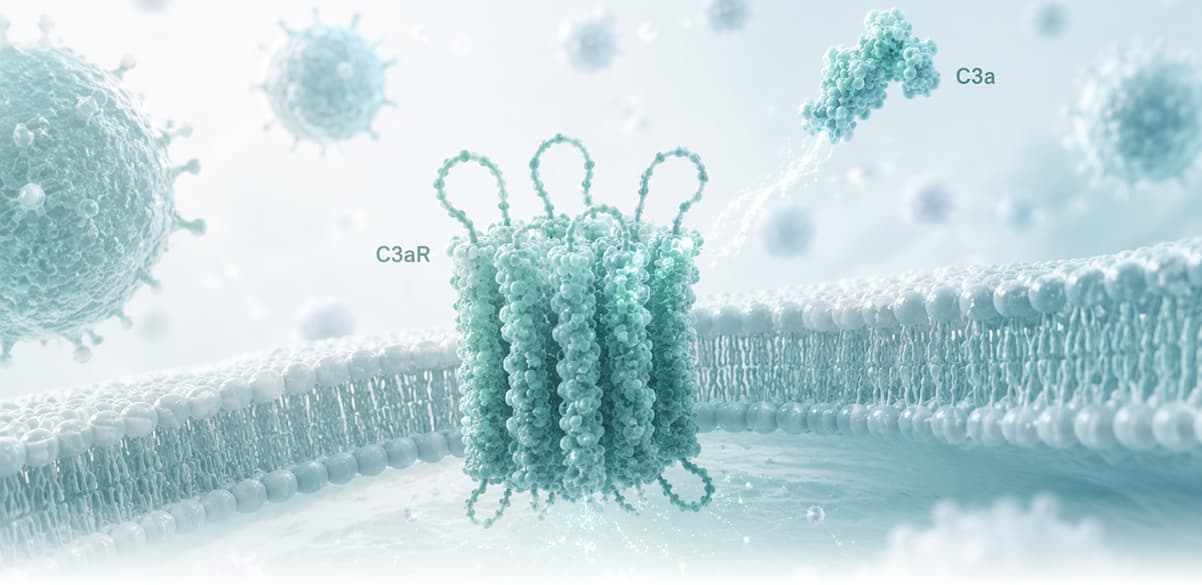
C3a signals.
C3a functions differently. Rather than tagging material for removal, it acts as a signalling molecule through C3aR — influencing immune-cell behavior, inflammatory amplification, tissue adaptation and broader immune coordination.
Receptor Activation
Signaling
Tissue Adaptation
Precision Immunology
'Clinically approved' complement therapeutics have validated the complement system as a powerful therapeutic space. But broad complement inhibition may also affect essential immune-defense functions.
C3aR represents a different intervention logic. By targeting the receptor for C3a - rather than blocking C3 itself - the goal is not to eliminate complement activity. The goal is to selectively modulate disease-relevant inflammatory signalling while preserving core protective functions.
Receptor-level modulation
Act on the GPCR, not the upstream protease.
Upstream inflammatory control
Intercept signal before amplification.
Preserved host defense
C3b-mediated clearance left intact.
Precision small molecules
Modern GPCR pharmacology, drug-like properties.
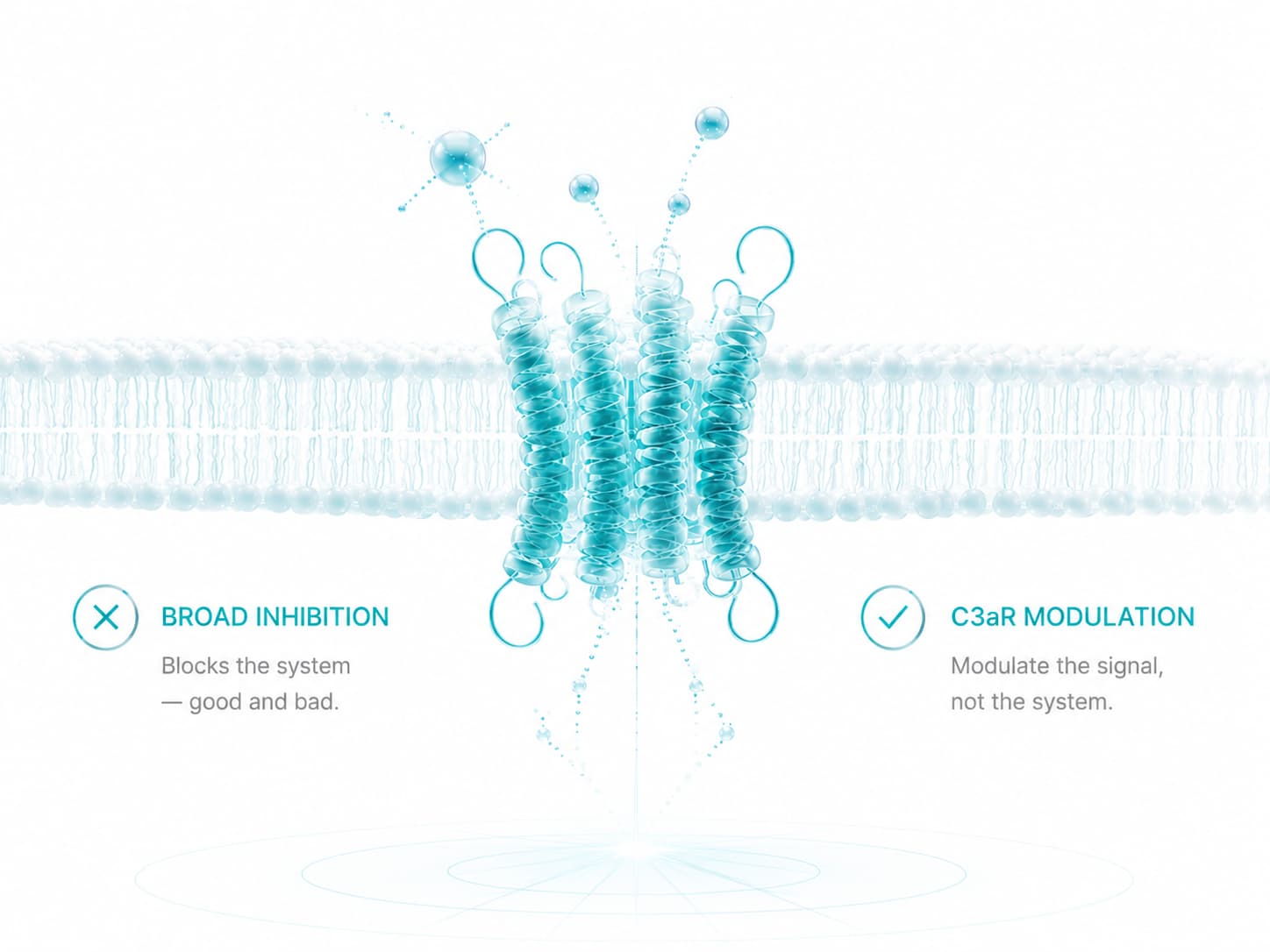
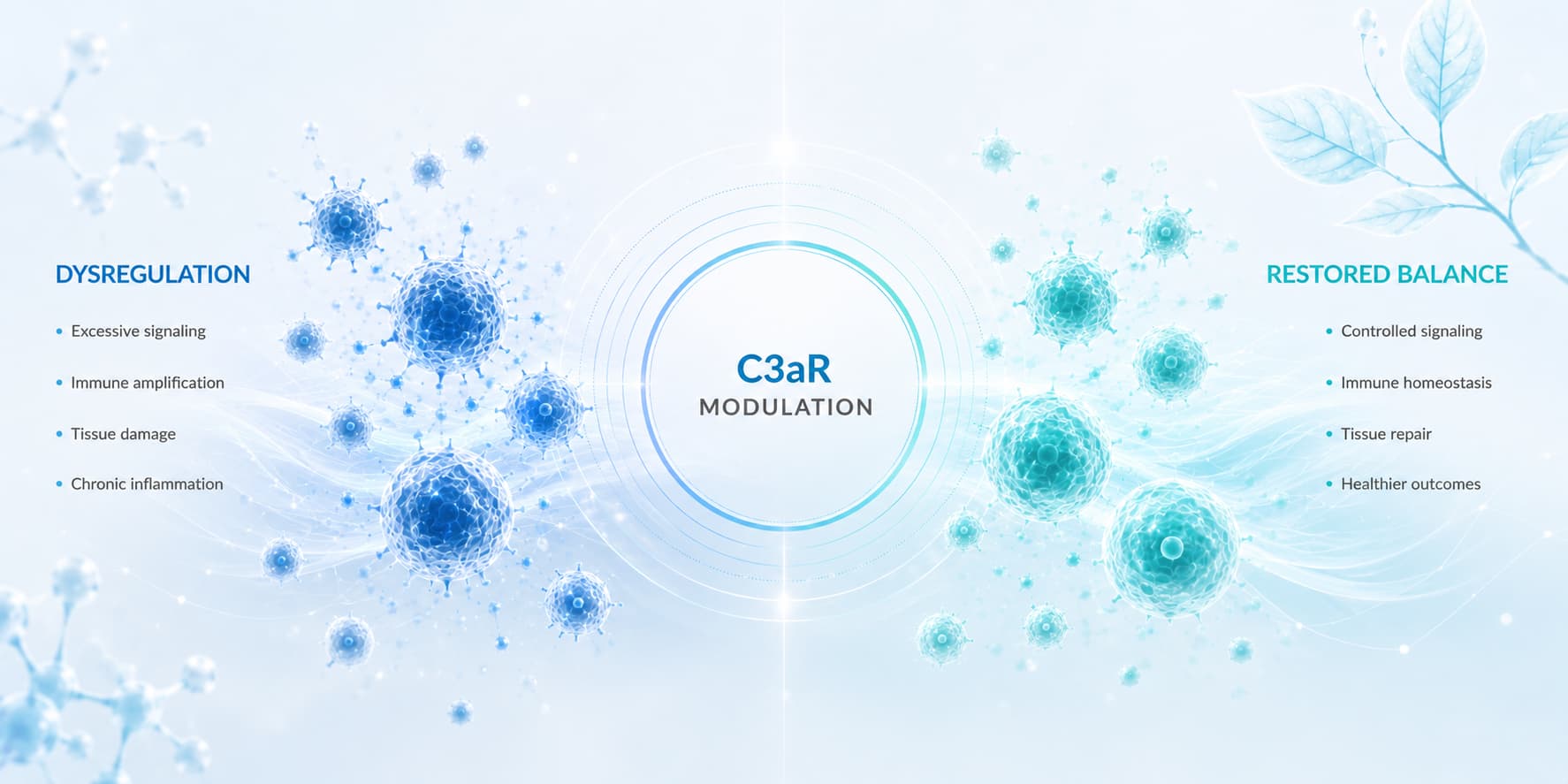
The therapeutic challenge in complement biology is balance. Too little complement activity may compromise immune defense. Too much can amplify inflammation and tissue injury.
Hypothesis
The goal is not broad immune suppression. The goal is selective control of inflammatory signalling — reducing disease-driving signals while preserving essential complement-defense mechanisms.
Enabling Advances
C3aR has historically remained underexplored compared with other complement targets. Earlier pharmacology and GPCR signalling challenges slowed progress and created uncertainty around receptor behavior.
Today, modern GPCR science changes what is possible - making it possible to revisit C3aR with significantly greater precision.
Cryo-EM Structures
Atomic-resolution receptor maps

Biased Signaling
Pathway-selective design

Translational Models
Disease-relevant biology

Primary Human Cells
Native immune contexts

Modern Med Chem
Difficult GPCR pockets

Receptor Dynamics
Context-dependent signaling
AshtaTx is building a differentiated small-molecule program around C3aR — a complement-linked GPCR positioned at the intersection of innate & adaptive, epithelial biology and inflammatory disease.
Our goal is to develop therapies that reduce disease-driving inflammation while preserving the protective immune functions.