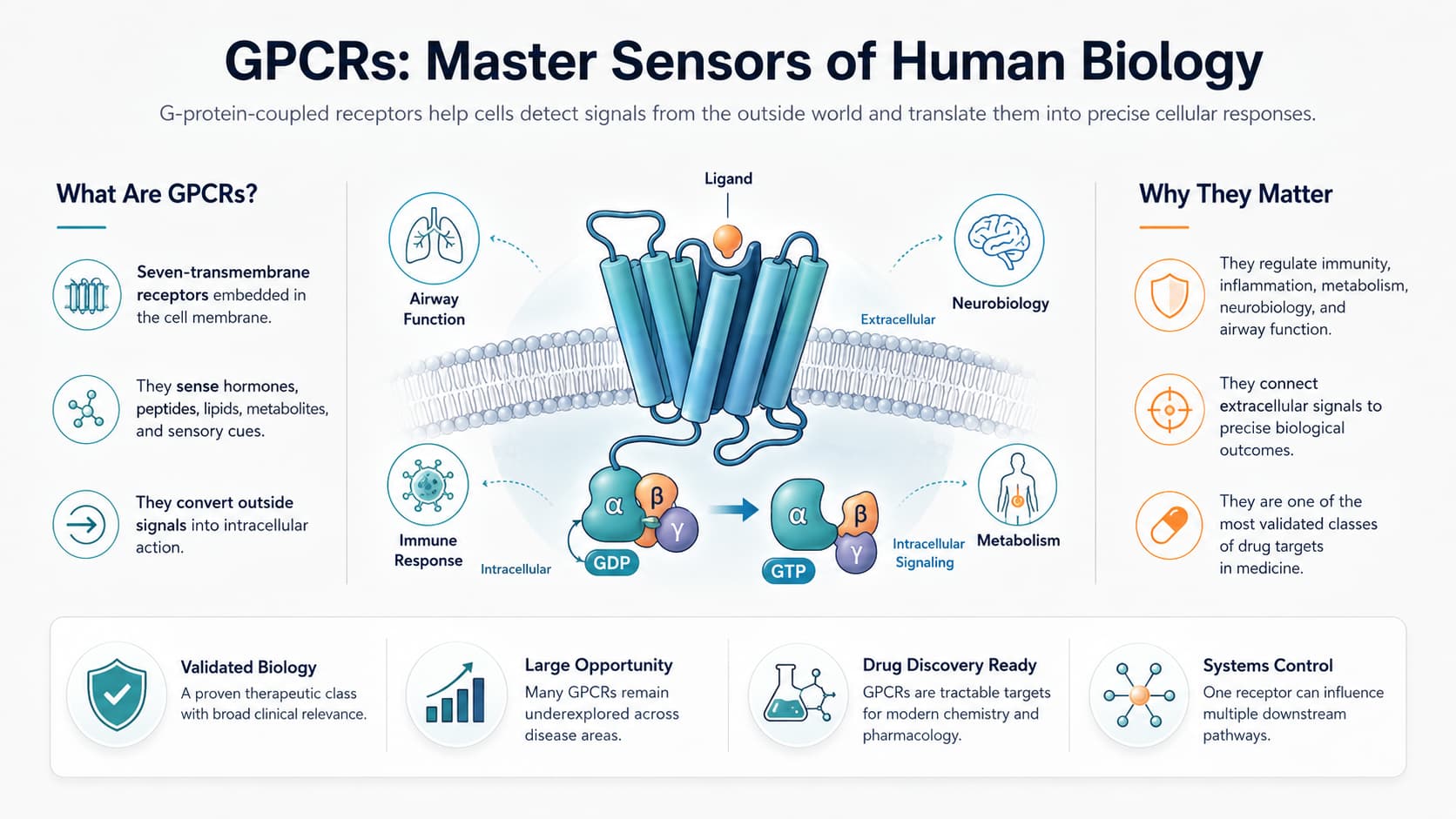
G-protein-coupled receptors help cells sense the outside world and translate those signals into precise biological responses.
What Are GPCRs?
G-protein-coupled receptors (GPCRs) are proteins embedded in the cell membrane. Their structure allows them to perform a remarkable task: they detect signals outside the cell and transmit that information inside the cell without allowing the outside molecule to physically enter.
When a ligand binds to a GPCR, the receptor changes shape. That shape change acts like a molecular instruction, telling the inside of the cell which signalling partners to engage and what kind of response to generate.
In this way, GPCRs behave less like simple switches and more like biological interpreters. They do not merely turn biology “on” or “off.” They help determine the strength, timing, location and quality of the cellular response.
GPCRs sit at the cell surface and convert extracellular information into intracellular action.
Why GPCRs Matter
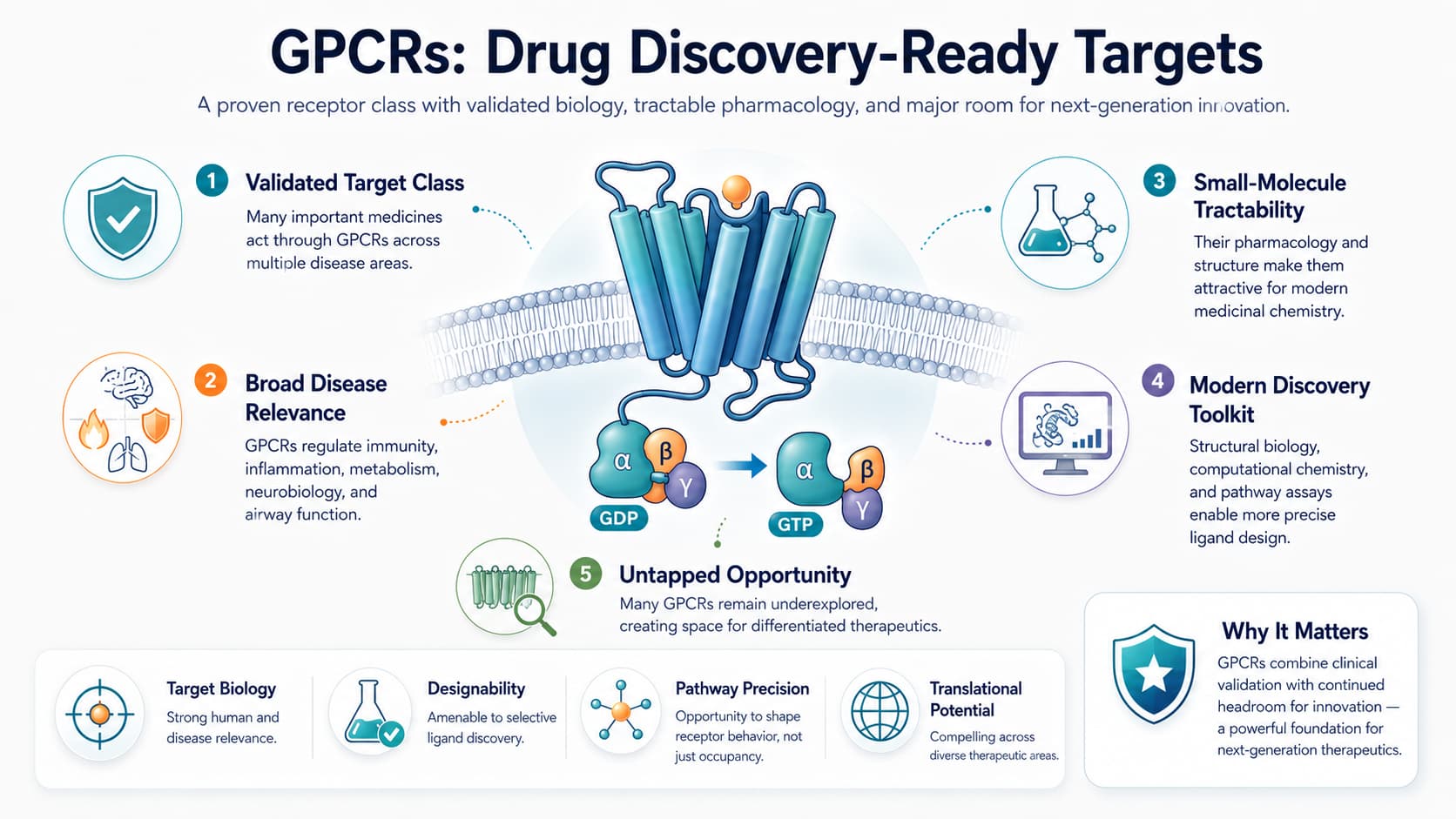
Some of the world’s most important medicines work by modulating GPCRs. Drugs for cardiovascular disease, migraine, asthma, allergy, pain, psychiatric disease, diabetes, metabolic disease and obesity all rely on this receptor family.
The reason is simple: GPCRs sit at control points in human biology. They connect upstream signals to downstream disease pathways. By modulating the right GPCR in the right way, it may be possible to correct disease-driving biology with precision.
Yet the field remains far from fully explored. Many GPCRs are still under-investigated, especially in immune-driven and inflammatory diseases. Even for known GPCRs, advances in structural biology, computational chemistry, cell signalling assays and intracellular pathway-selective pharmacology are creating new ways to design more refined medicines.
For AshtaTx, this creates an important opportunity: to apply modern GPCR drug discovery to immune mechanisms where biology is compelling but therapeutic translation remains underdeveloped.
GPCRs are validated drug targets, but many disease-relevant GPCR mechanisms remain underexplored.
Traditional drug discovery often treated GPCRs as simple targets: activate the receptor, block the receptor or reduce its activity. But modern GPCR biology is more nuanced.
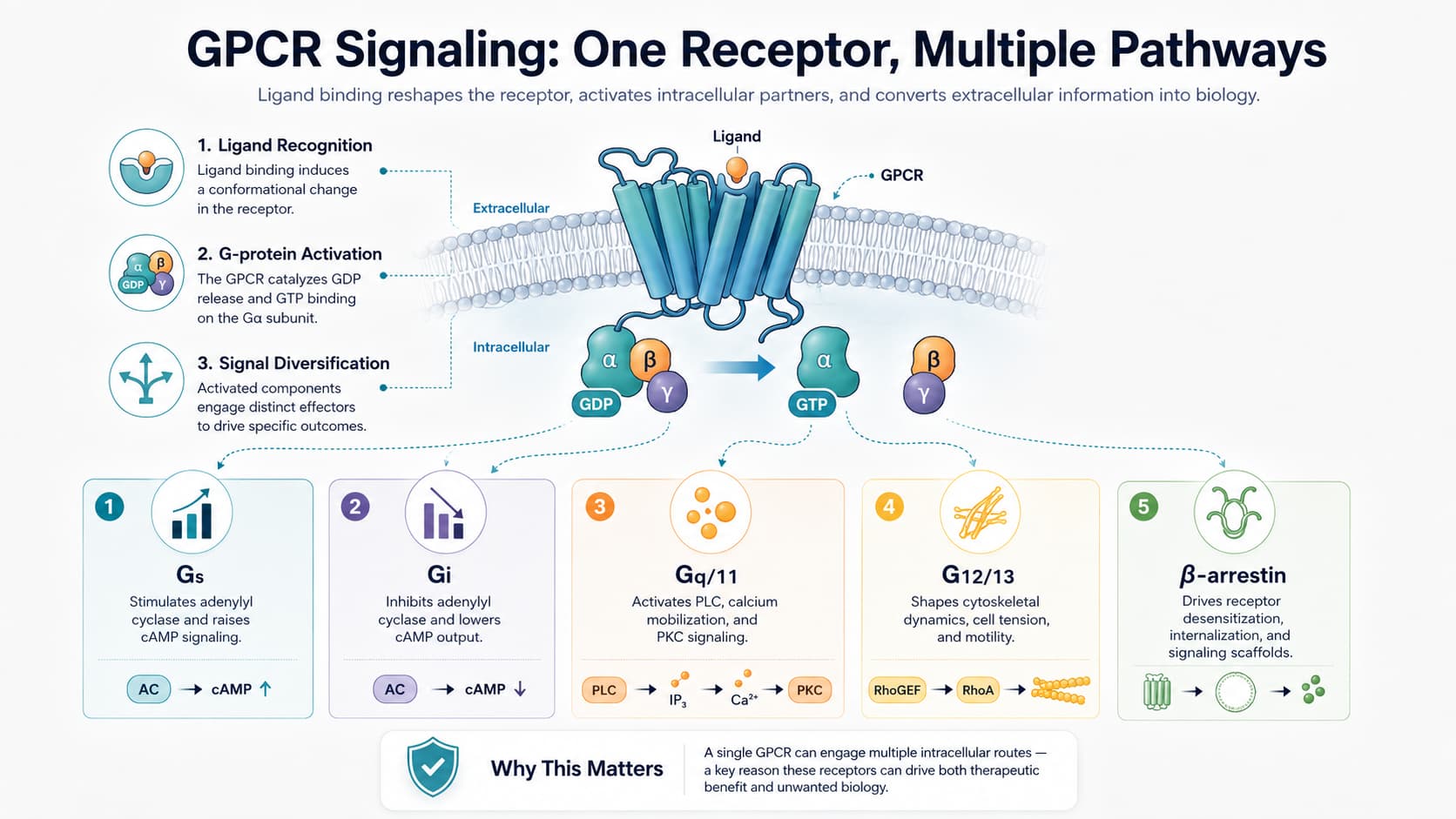
A single GPCR can engage multiple intracellular partners, including different G proteins, GPCR kinases and β-arrestins. These partners can drive distinct biological outcomes. Some pathways may contribute to therapeutic benefit, while others may amplify disease or cause unwanted effects.
For example, GPCRs can signal through G-protein families such as Gs, Gi, Gq/11, and G12/13. These pathways regulate second messengers, calcium signalling, kinase activation, cytoskeletal dynamics, cell movement, secretion, immune activation and many other cellular processes.
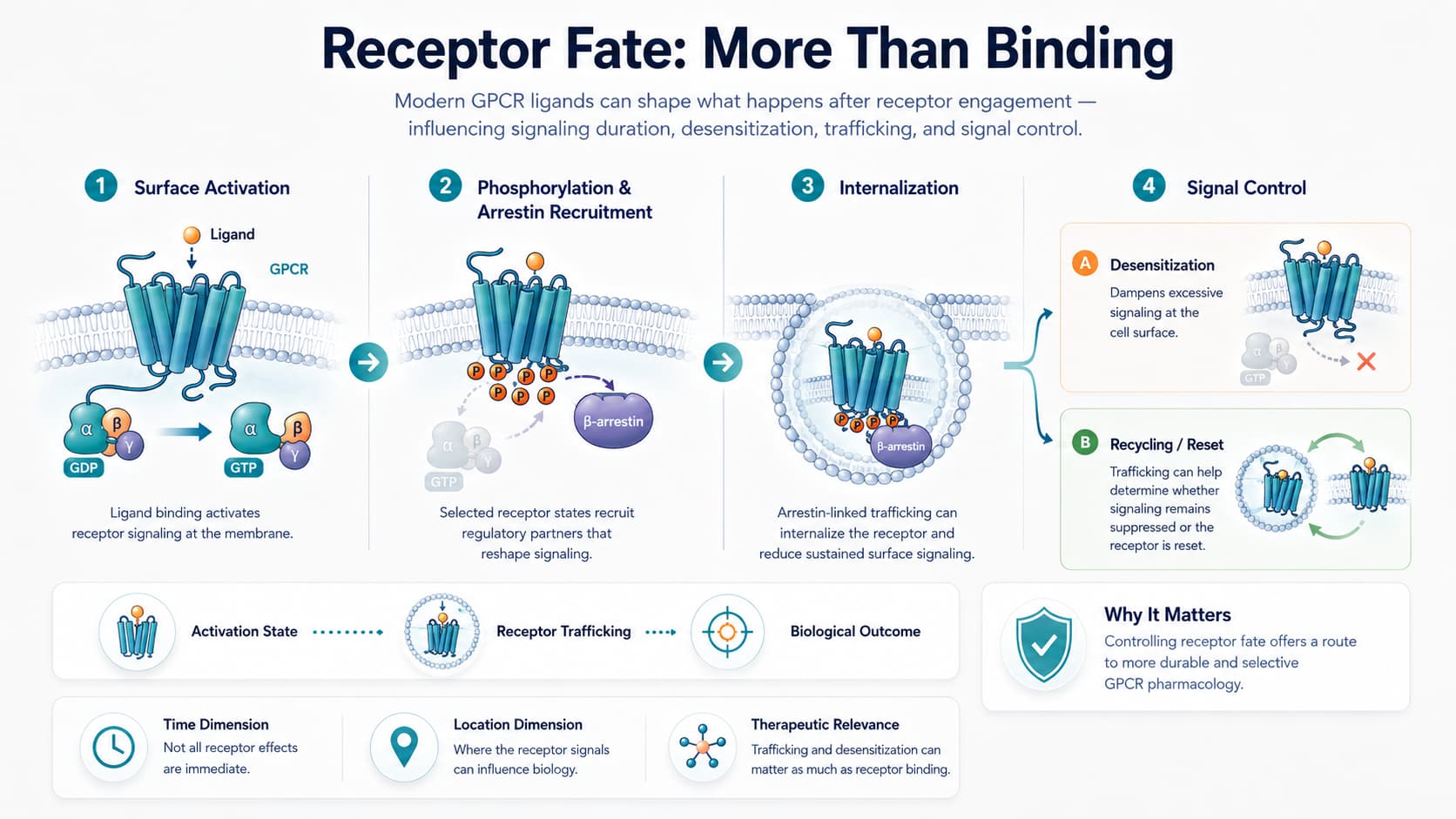
GPCRs can also recruit β-arrestins. β-arrestins were originally understood as proteins that are recurited after G-protein activation to help stop or desensitize GPCR signalling. Today, they are recognized as multifunctional signalling and trafficking regulators. They can help determine whether a receptor remains active at the cell surface, becomes desensitized, is internalized into the cell or continues signalling from intracellular compartments.
GPCR signalling is not a single route. It is a network of pathway choices that shape cellular outcomes.
Rheostat Concept
A light switch turns a signal on or off. A rheostat controls intensity.
GPCRs behave more like rheostats. They can tune the strength, duration and direction of cellular signalling. The same receptor can produce different outcomes depending on the ligand, the cell type, the receptor state and the signalling proteins available inside that cell.
This matters for drug discovery. If disease is driven by an inappropriate or excessive GPCR signal, the ideal medicine may not simply be the strongest blocker. It may be the molecule that shapes receptor behavior most precisely.
The next generation of GPCR therapeutics is therefore moving beyond the question:
“Does the molecule bind the receptor?”
Toward a more powerful question:
“What does the molecule make the receptor do?”
Modern GPCR drug discovery focuses on shaping receptor behavior, not simply turning receptors on or off.
Biased Signalling
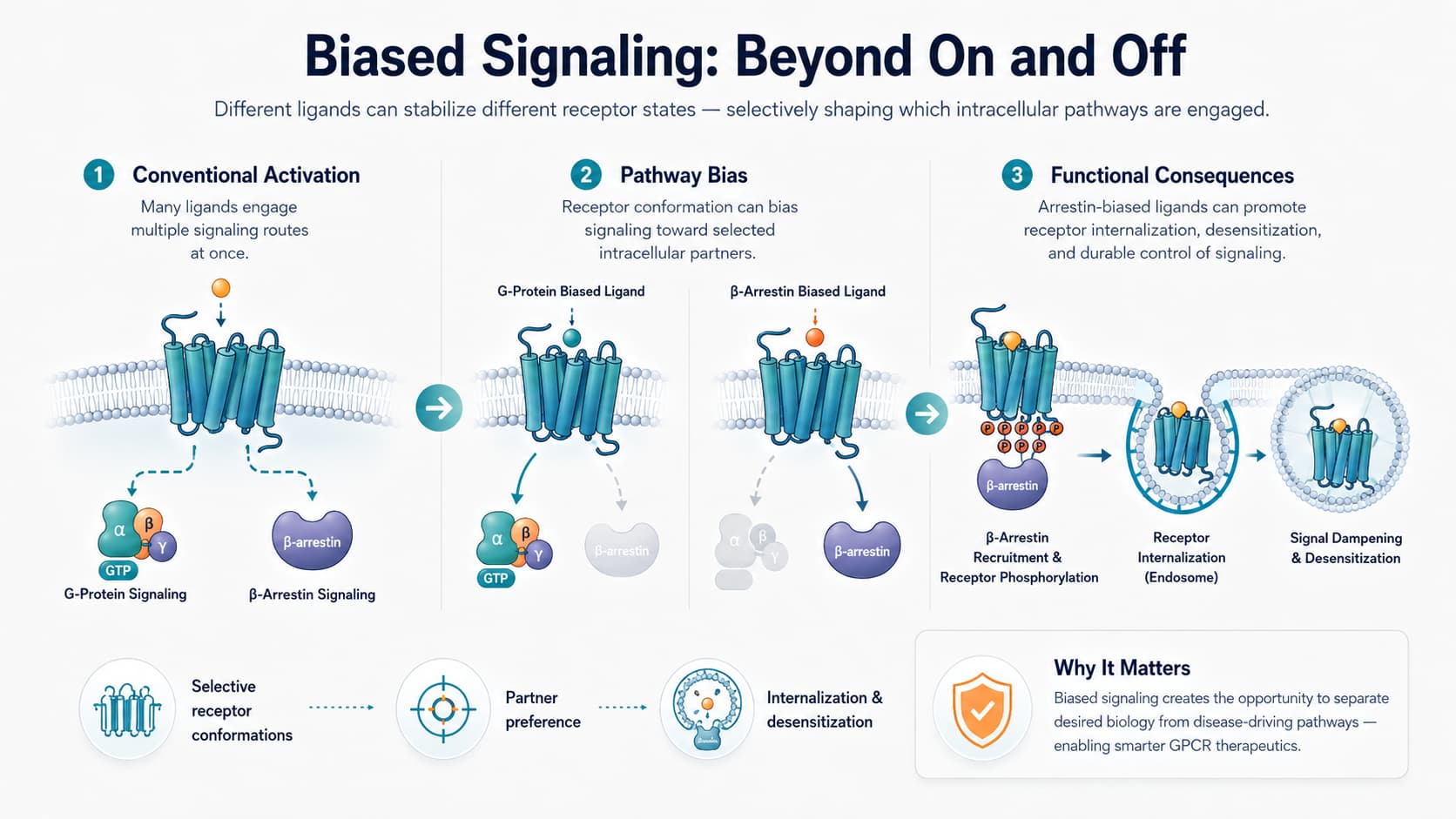
Different ligands can bind the same GPCR and stabilise different receptor conformations. These conformations can favor some intracellular pathways over others. This phenomenon is known as biased signalling or functional selectivity.
Biased signalling opens an important therapeutic possibility: separating disease-driving biology from beneficial or regulatory biology. Instead of treating the receptor as a blunt target, drug discovery can aim to design ligands that guide the receptor toward a preferred signalling state.
In practical terms, this means a molecule may be designed not only to bind a GPCR, but to influence whether that receptor preferentially activates G-protein signalling, recruits β-arrestin, undergoes internalization, becomes desensitized or engages longer-lasting intracellular signalling complexes.
For inflammatory diseases, this concept is especially powerful. Many immune pathways are not inherently bad; they are protective when properly controlled. Disease often emerges when these systems are chronically activated, amplified or fail to resolve. A pathway-selective GPCR medicine could potentially restore control without broadly suppressing immune function.
Biased signalling creates the opportunity to redirect receptor behavior toward selected biological outcomes.
β-Arrestin Signalling
β-arrestin biology adds another layer of precision to GPCR pharmacology.
When certain ligands bind to GPCRs, they can immediately recruit β-arrestins. This can prevent or reduce G-protein signaling at the cell surface, promote receptor internalization and alter how long or where the receptor continues to signal. In some contexts, this process helps dampen excessive receptor activity, induce receptor desensitisation and restore cellular control.
This creates a powerful therapeutic concept: rather than only blocking a disease-driving receptor, a ligand may be designed to redirect the receptor into a less inflammatory, disease-dampening state.
For AshtaTx, this principle is central to how we think about next-generation GPCR medicines. We are interested in small molecules that do more than occupy a receptor. We aim to understand and shape receptor behavior - including signaling bias, desensitization, internalization and durable control of inflammatory pathways.
Our goal is to move beyond receptor blockade toward functional receptor control - designing molecules that influence not only receptor inactivation, but receptor fate.
β-arrestin-linked receptor trafficking can provide a route to dampen sustained GPCR-driven signalling.
At AshtaTx
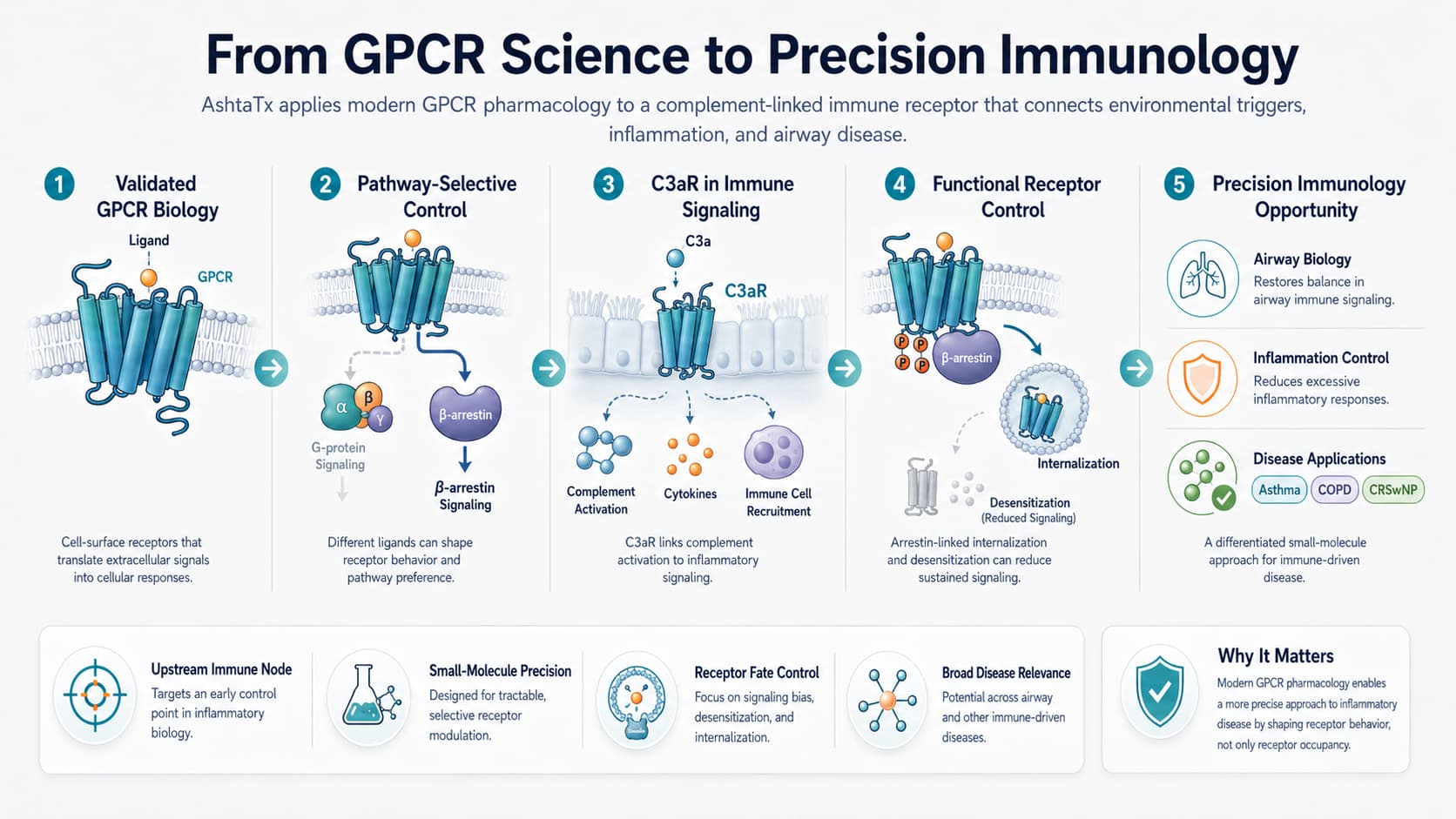
AshtaTx is applying this modern view of GPCR biology to immune-driven diseases.
Our scientific focus is the C3a-C3aR axis, a complement-linked GPCR pathway that sits at the interface of environmental triggers, innate & adaptive immunity, inflammatory signaling and tissue dysfunction. In diseases such as asthma, COPD and other chronic inflammatory airway diseases, upstream immune triggers can activate pathways that amplify cytokine release, immune-cell recruitment, mucus production and airway remodeling.
We believe C3aR represents an important and underexplored GPCR node in this biology.
Our approach is to design small molecules that can precisely modulate C3aR signaling. Rather than viewing GPCR pharmacology only through the lens of conventional agonism or antagonism, we are exploring how pathway-selective ligands can influence receptor activity, receptor trafficking and receptor desensitization.
This is the foundation of AshtaTx’s precision immunology strategy:
Targeting upstream immune control points with small molecules designed for specific biological outcomes.
AshtaTx is applying modern GPCR pharmacology to a differentiated complement-linked inflammatory target: C3aR.